Thoughts on AI
Table of Contents
The recent chain of events has been quite interesting. Most early-career researchers would agree that the way AI is solving math problems has been quite scary. Perhaps this is because people took pride in solving these hard problems, and now many of them can be solved with a single prompt.
In this post, I would like to share some of my own thoughts, along with those I have gathered from conversations with different people. Yes, you can skip my ramblings. They probably don’t make much sense anyway. There have probably been hundreds of blog posts on this topic, and in some ways, mine might not be that different. However, I intend to keep updating the section on others’ thoughts. I would like to keep these opinions anonymous (unless the individuals agree to share their names) and date them so that I can track how researchers’ opinions change as AI systems evolve.
My Thoughts #
From what I understand, solving math problems often involves trying different tools that you have learned in classes, talks, or hallway discussions, applying them to a particular setting, and checking whether they work. AI seems to automate this process. It has access to a vast amount of mathematical knowledge, so it knows almost all the existing techniques and can try them out. In that sense, it is not surprising that it can outperform humans.
A popular analogy in these discussions is that AI is another revolution, much like the calculator or the computer. However, I think this analogy is fundamentally flawed. Calculators and computers replaced certain tasks that humans could perform, whereas AI aims to replace virtually anything that humans can do (or at least that seems to be the goal). This sounds pessimistic, yes, but does that mean we have nothing left to contribute?
This brings me to what I believe we, as academics, can still contribute.
First of all, there is AI writing math. Currently, it is not good at writing math. The proofs are sloppy, have a lot of notation and lengthy English arguments, and seem hand-wavy. It is not that AI cannot make these arguments rigorous; rather, it struggles to produce a well-written, rigorous proof in a single prompt. So, one popular view is that our role will be to “de-slop” AI-generated proofs.
Second, there is something else that I do not see discussed very often in academic settings: abstraction.
The whole point of abstraction was never merely to solve individual problems, but to make problems easier to understand and eventually develop tools to solve them. The main idea was to develop tools that work in sufficiently general settings so that one can use them to hammer similar problems.
Although AI seems to be quite good at solving individual problems, I am not sure whether it will come up with useful abstractions. A common analogy is this: if you ask an AI trained only on pre-group theory mathematics to show the insolvability of the quintic, would it invent group theory? I don’t know. Maybe future models will.
Others’ Thoughts #
Most of these thoughts are not exact quotes but rather what I remember from our conversations. Here is what some professors and friends had to say. I am sharing their thoughts anonymously for obvious reasons.
(November 2026) Mathematics will now be less about the technical heavy lifting and more about looking for interesting problems.
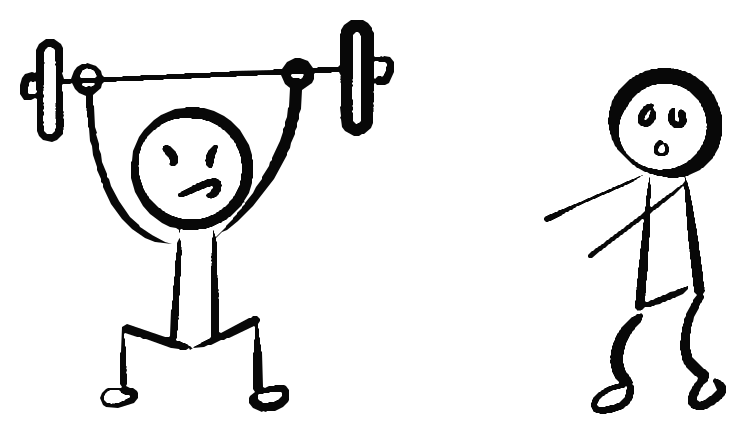

(October 2026) AI systems generally require the germ of an idea, and then they can push it to its limits. This makes your progress much faster.
(October 2026) The goal of students is to solve problems. People are rewarded for solving problems. No one gets a grant for saying, “This year, I thought about connections between A and B.” PhD positions, postdocs, and assistant professorships are all awarded based on the problems you solve.
(October 2026) Solving problems is probably not that important anymore. Think about the other sciences. No one really “solves” anything in biology, for example. I think we still need to understand these solutions.
(October 2026) Yes, I don’t know what the hiring process will look like. Some people are problem solvers. You give them a problem, and they will try to come up with something to solve it. I don’t know what their future will be like. On the other hand, at least in probability, there are things that we know to be true, but no one knows why they happen. Having a probabilistic interpretation of such phenomena will be interesting and not immediate for AI.
(October 2026) We still need students because they bring their heterogeneous opinions and ideas. If everyone just uses AI, we get a homogeneous society.
(October 2026) Statistics is about looking for an actual problem, formulating the math behind it, and then solving the math. Although AI has automated the math, someone still needs to identify interesting and important problems; and build the mathematical framework.
(Aug 2026) I think it is possible to appreciate beautiful math the way one appreciates going sightseeing on vacation. Even if it figured out by AI.
(Early 2026) I will probably never use AI, primarily because of its environmental impact.
(Late 2025) Even if I had a helicopter to reach the mountain peak, I would still prefer to hike because I enjoy hiking.